
The Friendships We Are Losing: Why Children Need Each Other More Than Ever
A thoughtful read for parents, children, and anyone who cares about how we grow up.
When I was growing up in the Middle East in the nineties, loneliness was not really something children talked about. Not because life was perfect, but because solitude was genuinely hard to come by. There were my sister and brother in the next room, friends a short walk away, and neighbours whose doors were open without needing an invitation. Connection was simply the texture of daily life – unplanned, unhurried, and completely taken for granted.
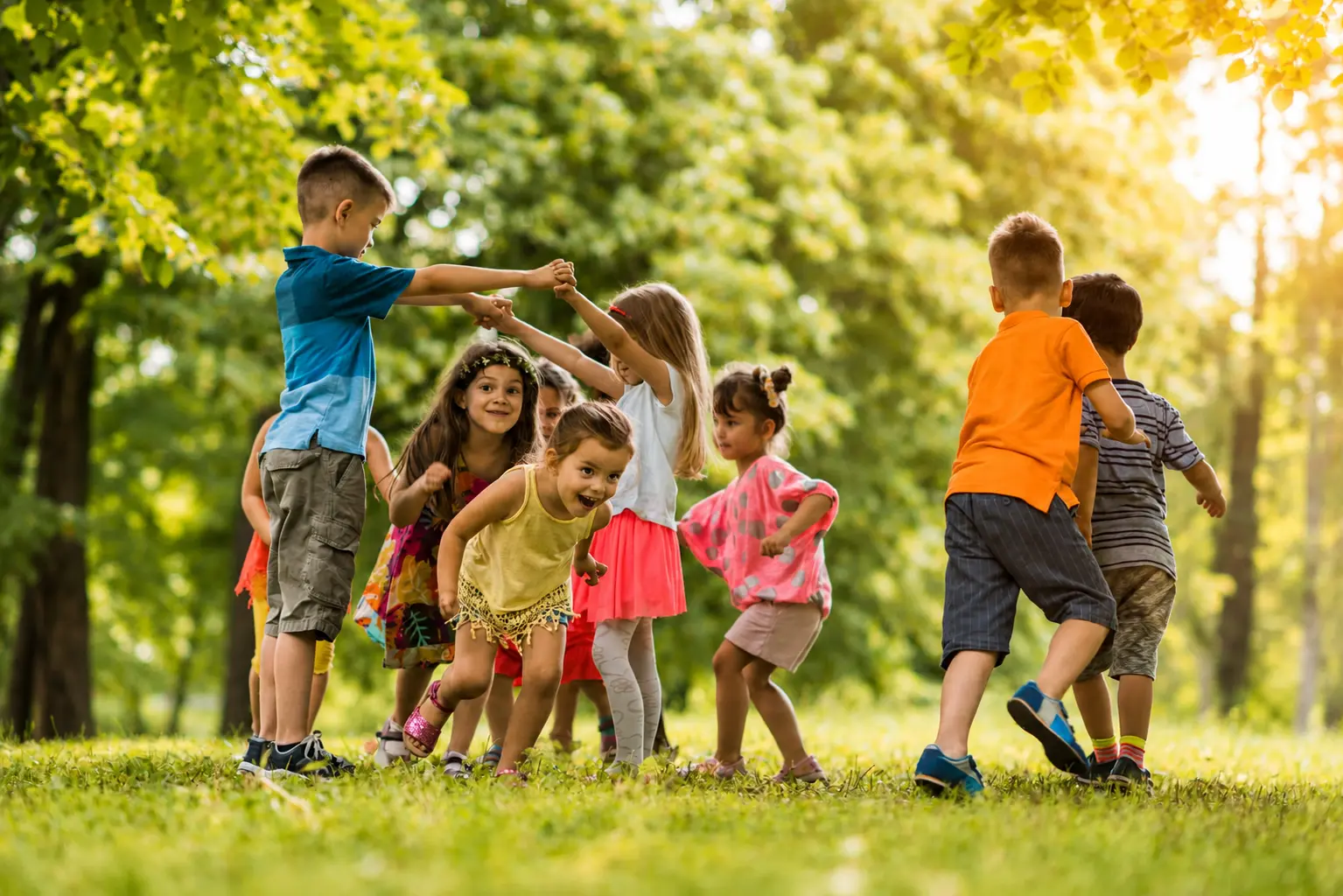
I remember summer afternoons that belonged entirely to a group of us. We would gather in someone’s yard or spill out onto the street, inventing games with no rules, arguing about those rules, falling out over them, and then making up again before it was time to go home. Nobody organised these hours for us. Nobody supervised the conflict resolution. We just figured it out – because we had to, and because the alternative was going home alone, which none of us wanted.
This was not unique to where I grew up. In most parts of the world, for most of human history, this was simply what childhood looked like. Children gathered. They played. They fought and forgave. They bored each other and entertained each other. And in doing all of that, quietly and without realising it, they were learning something profound: how to be with other people.
“We did not have the word for it then. But what we were doing, every single afternoon, was building the capacity to be human together.”
WHAT THOSE YEARS WERE ACTUALLY TEACHING US
Personality does not develop in a vacuum. It develops in friction – in the small, daily encounters where you want one thing and someone else wants another, and you have to find a way through. When a child plays with others, they are not just having fun. They are learning to read faces. To notice when a friend is upset even before they say so. To hold back when they want to push forward. To apologise when they have gone too far. To trust that a relationship can survive disagreement.
These are not small things. They are the very foundations of empathy – of the ability to feel what another person is feeling and respond with care. And empathy, it turns out, is not something we are simply born with in full. It is something we grow, slowly, through hundreds and thousands of real interactions with real people who push back, surprise us, disappoint us, and forgive us.
The child who spends those years in genuine connection with others arrives at adulthood with something invisible but invaluable: the knowledge, held deep in the body, of how relationships actually work.
SOMETHING HAS QUIETLY CHANGED
Today, childhood looks different. Not in every home, not in every corner of the world — but in a growing number of them. Children come home from school and disappear into their rooms. Playdates require scheduling. Friendships that once lived on streets and in yards now live on screens – in group chats, in online games, in the muted company of physically absent people.
Homes have become more comfortable than ever before, and that comfort has a gentle gravity to it. Why navigate the complexity of other people when you can be entertained, at any hour, in the safety of your own space? It is a reasonable question. And children, like all of us, tend to follow the path of least resistance.
But something is being lost in that comfort. The friction that used to feel like a nuisance – the argument over whose turn it was, the awkward silence with someone you didn’t know well yet, the moment you had to say sorry and mean it – that friction was doing important work. It was the training ground for the most essential human skills we have.
“We learned who we were by bumping up against who other people were. That is not a metaphor. It is how it actually works.”
WHAT WE ARE SEEING NOW
The consequences are becoming visible – not all at once, but in patterns that are hard to ignore once you start noticing them. Young adults who find conflict in relationships almost unbearable, because they grew up in environments where conflict could simply be avoided. Friendships that feel shallow and are easily abandoned when they become difficult. Marriages that fracture not from great crises but from a simple, painful inability to truly understand another person – to stay with them through the discomfort of being known.
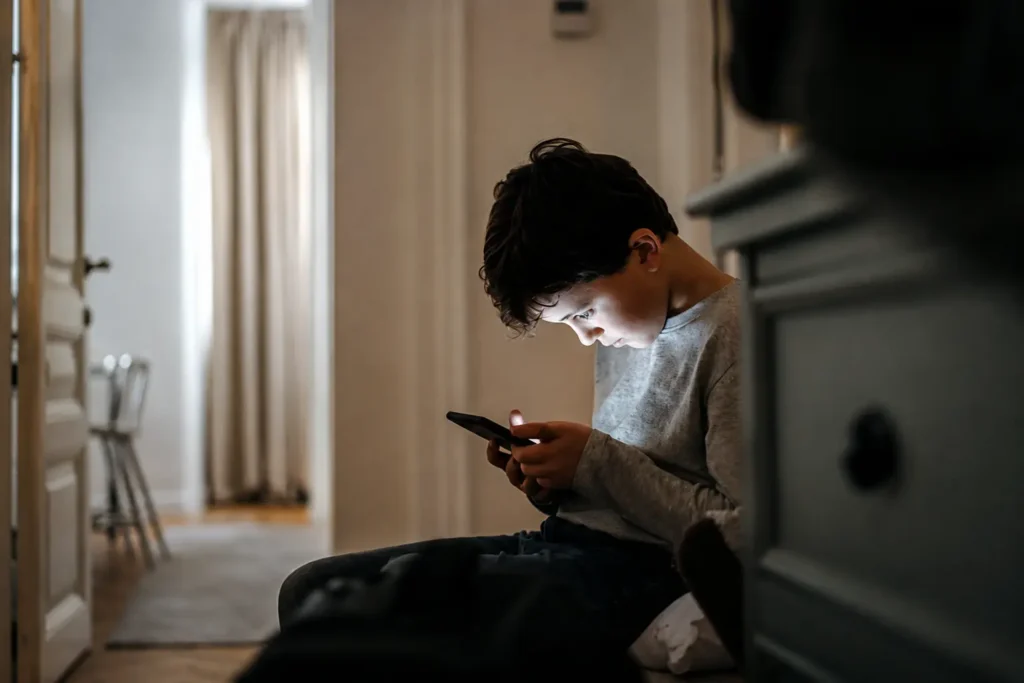
Loneliness among young people has become, in many countries, a quiet epidemic. And the strange paradox of it is this: these are the most connected generations in history, by every technical measure. They have more contacts, more followers, more ways to reach people than any generation before them. And yet something in the quality of those connections – the depth, the durability, the sense of being truly seen – is missing.
Online interaction is nothing. But it is also not the same. A screen filters out the very things that make a connection real: the hesitation in someone’s voice, the way a person’s eyes change when they are actually listening to you, the physical presence of another human being who has chosen, for this moment, to be here with you.
WHAT CHILDREN ACTUALLY NEED
The answer is not complicated, even if it requires some deliberate effort in a world designed around individual comfort. Children need other children. They need unstructured time together – time with no agenda and no adult hovering to smooth over every difficulty. They need to experience the full range of what real relationships feel like: the warmth and also the friction, the joy and also the repair.
They need to learn that a friendship can survive a fight. That a relationship is not ruined because two people see something differently. That disagreement is not the end – it is often where the real understanding begins.
These are lessons that cannot be taught in a classroom or learned from a screen. They can only be lived. And the living of them requires time, presence, and the genuine company of other human beings.
If we want children who grow into adults capable of loving well, of maintaining friendships, of building marriages that hold, then we have to give them the conditions in which those capacities can actually grow. Not perfectly. Not without difficulty. But together, in the beautiful, frustrating, irreplaceable way that only a real human connection makes possible.
“The most important thing we can give a child is not a skill or a lesson. It is another person to grow alongside.”
I think back to those summer afternoons. The arguments that resolved themselves before sunset. The friends who knew things about me I had never said out loud, simply because they had been paying attention. The sense, at the end of a long day of being together, of feeling somehow more settled in myself – not despite the friction of other people, but because of it.
That is what genuine human connection does. It does not just give us company. It gives us ourselves.
For more about the author – https://thecelestialmind.in
https://www.instagram.com/wiljowilson?igsh=OGhpNDh4b21sMGIy

Mr. Wiljo Wilson
Psychotherapist And Founder Of The Celestial Mind.

mobithemarketer
June 11, 2026 at 3:07 amThis article is absolutely crucial and relevant in today’s society. With the rise of technology, children are losing out on the valuable face-to-face interactions that are essential for developing genuine friendships. These friendships are not just important for socializing, but they also help children develop empathy, communication skills, confidence, and emotional resilience. It’s time for parents, educators, and communities to recognize the importance of nurturing these friendships and prioritize them in children’s lives.